
Details
- Client
- Ambratic concept
- Theme
- A walk through an impossible garden
- Format
- Interactive 3D story site
- Services
- Concept · Art direction · 3D · Motion
- Stack
- Next.js · Blender · Cycles
- Year
- 2026
Introduction
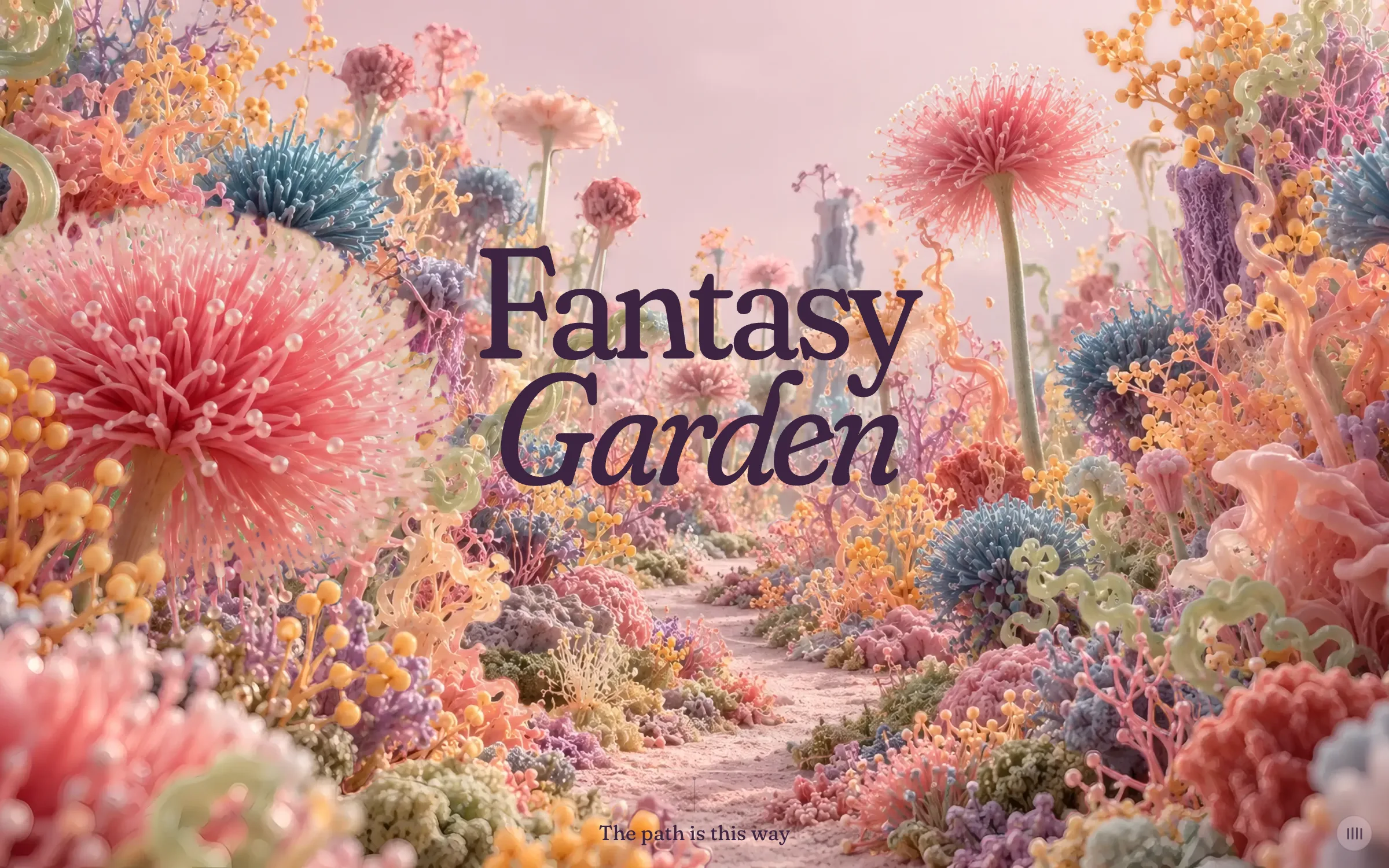
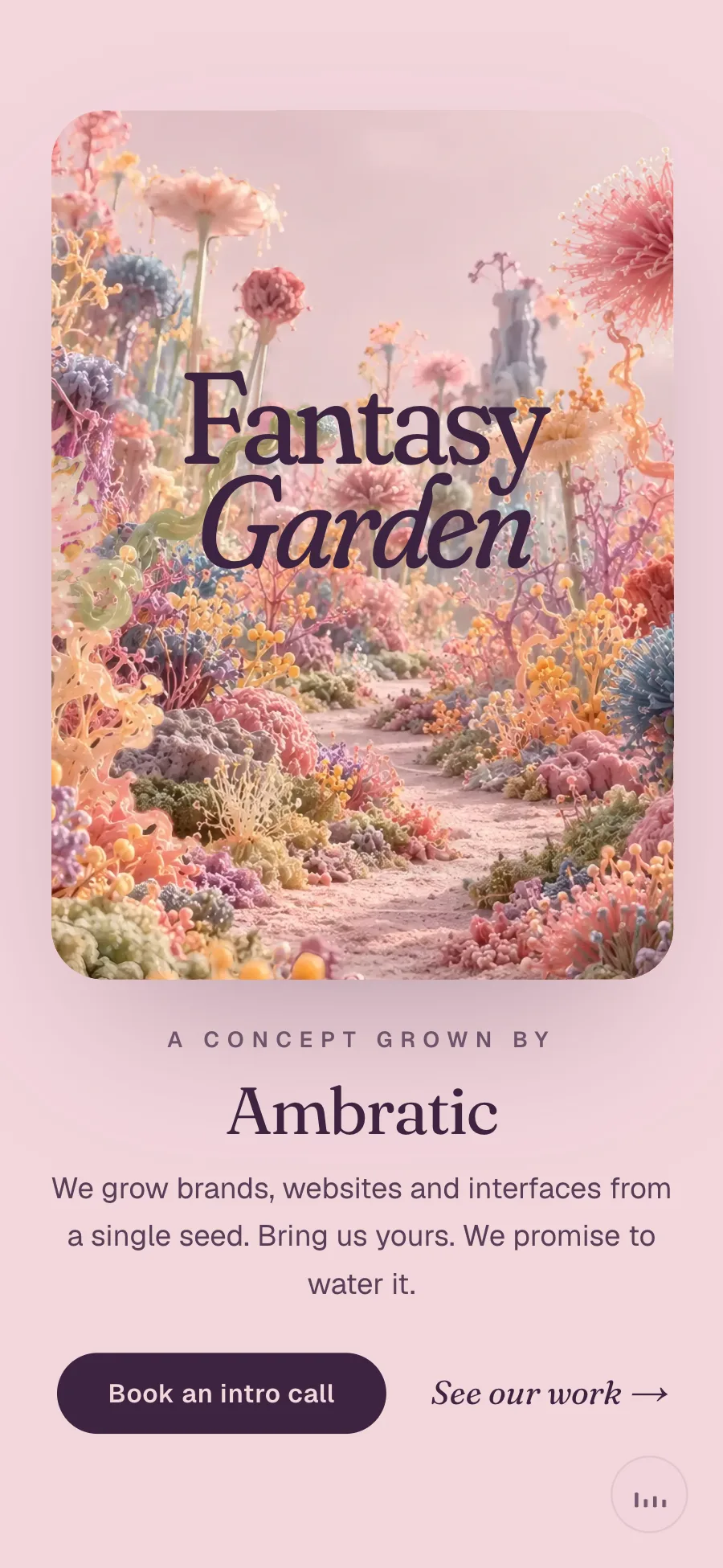
Fantasy Garden is a 3D walk through a place that could never grow. You touch a single bloom to step inside, the music rises, and every scroll carries you further down the path, past three flowers we made ourselves in Blender. One turns through a full 360 degrees, one unfurls as you scroll, and one hides the moment you reach for it. Then the path leads back out, and the garden closes behind you with our name on it.
A garden that could never grow
Fantasy Garden started as a studio question: how much feeling can a website carry with almost nothing to say? There is no product here and nothing to buy. Just a place, and the pleasure of walking through it slowly.
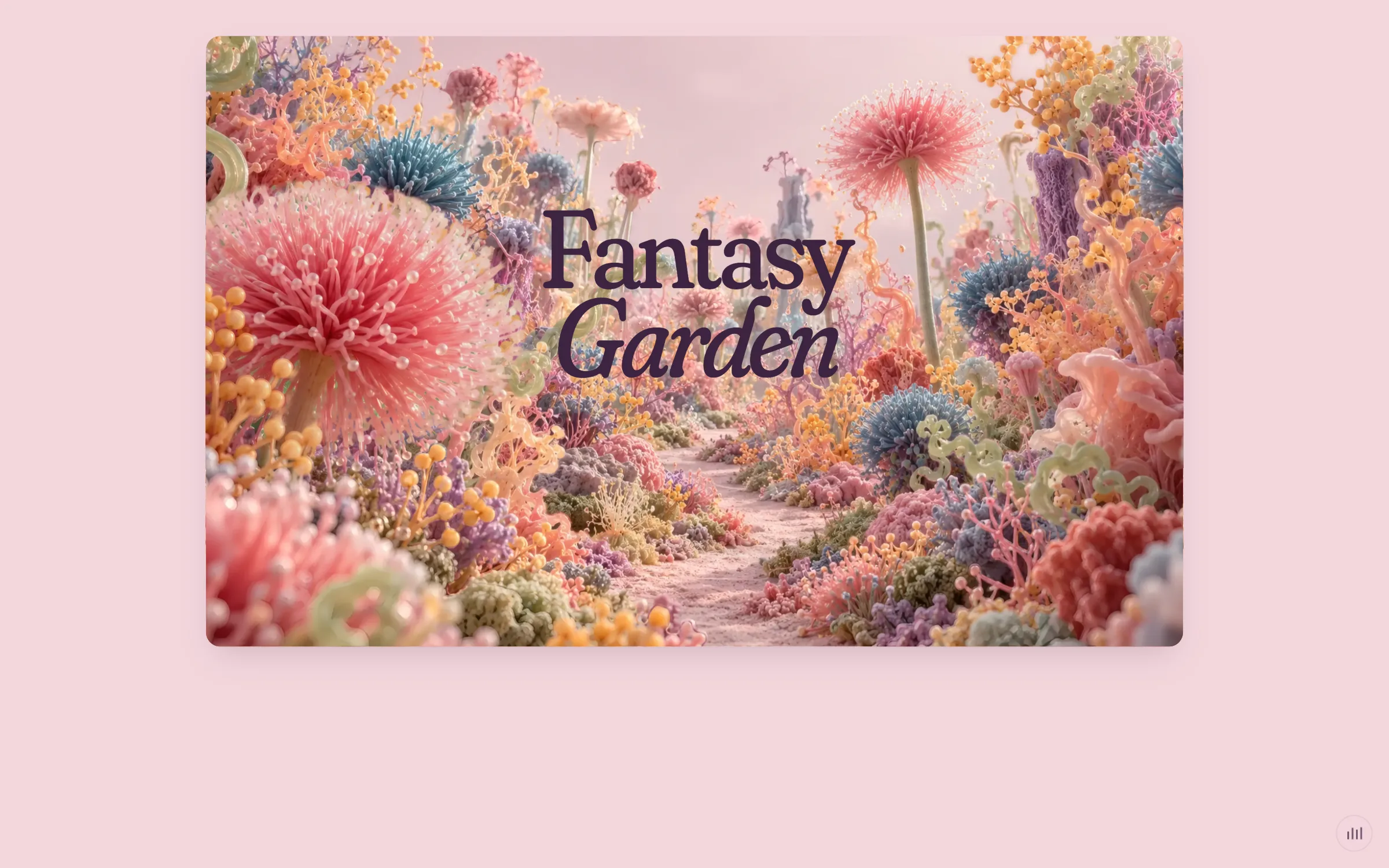
So we imagined a garden made of sugar glass. Pink puffballs with pearl-tipped threads, blue anemones, amber sprigs and pale tendrils crowd both sides of a sandy path that disappears into a rose-coloured haze. Nothing in it exists in nature, yet everything looks as if you could touch it.
The rest of the site borrows from an old botanist’s album. Past the garden, the page turns to dusty pink paper, each flower is catalogued as a numbered specimen with its own field notes, and Fraunces, a soft and slightly old-fashioned serif, gives the words the voice of a handwritten label.

The door is a flower
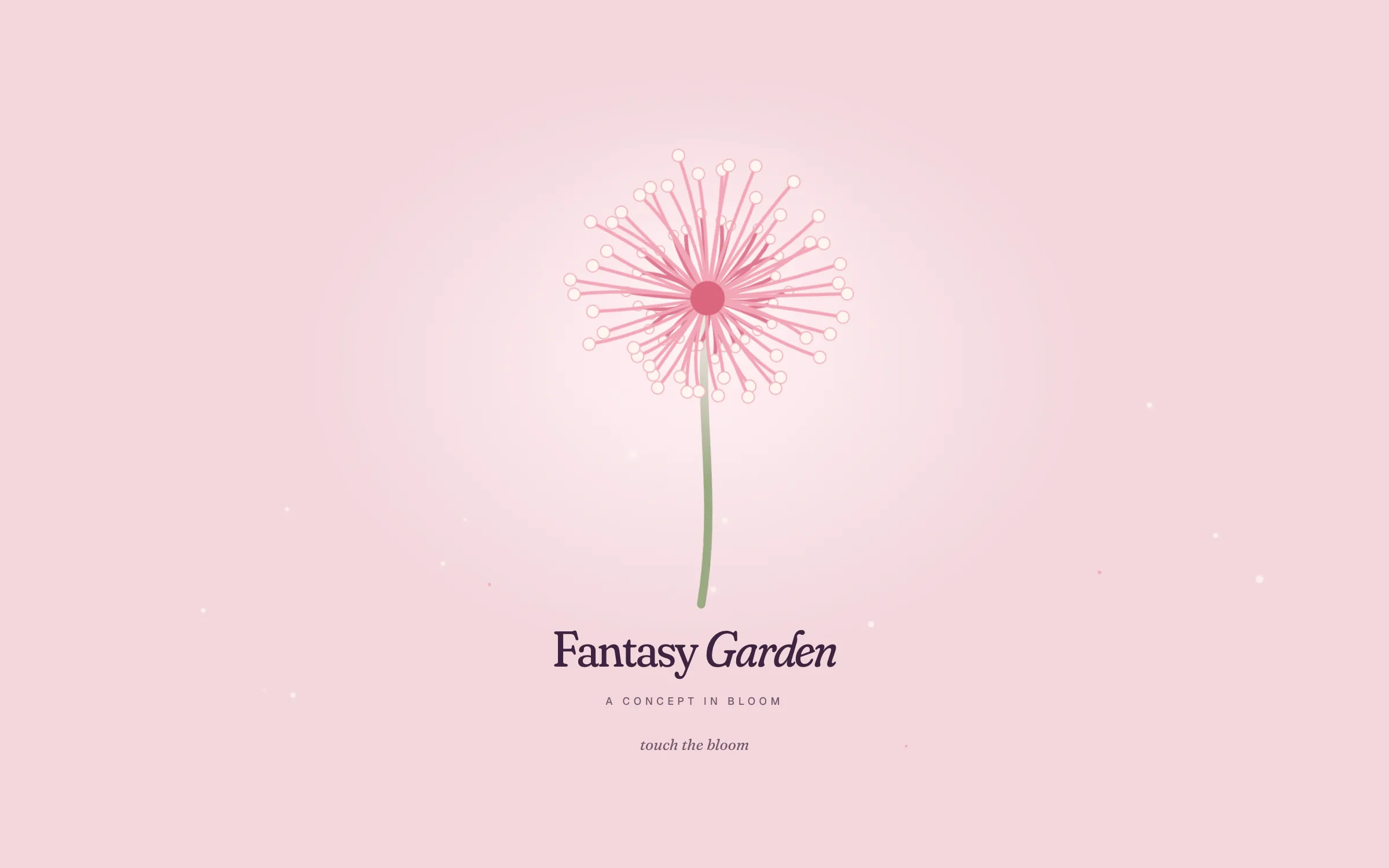
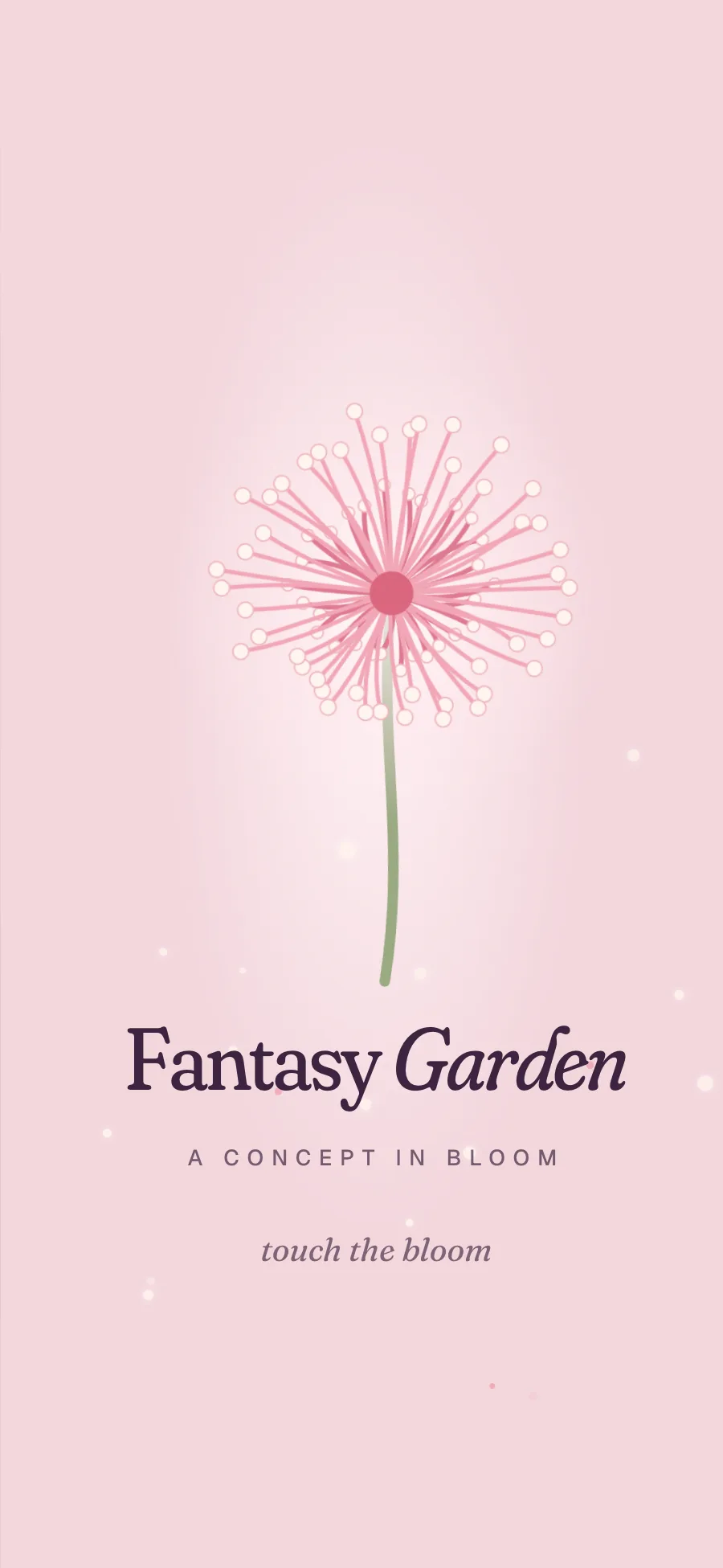
The walk begins before the garden does. While the page loads, a single pink bloom opens on a blank rose background, the title is traced letter by letter as if by hand, and a thin thread under the line “the garden is waking…” shows the progress.
When everything is ready, the words change to “touch the bloom”, and the flower itself becomes the way in. It glows and leans towards your pointer. Touch it and it bursts, threads flying and pearls scattering, and the garden opens out of its head while the title comes into focus.
That same touch starts the music. Browsers only allow sound after a click, and here that rule turned into a nice piece of staging: the moment you enter is the moment the soundtrack, “My Little Garden of Eden” by Geoff Harvey, fades in and begins to loop. It pauses when you leave the tab, and a small toggle in the corner switches it off at any time.
A walk you feel in the scroll
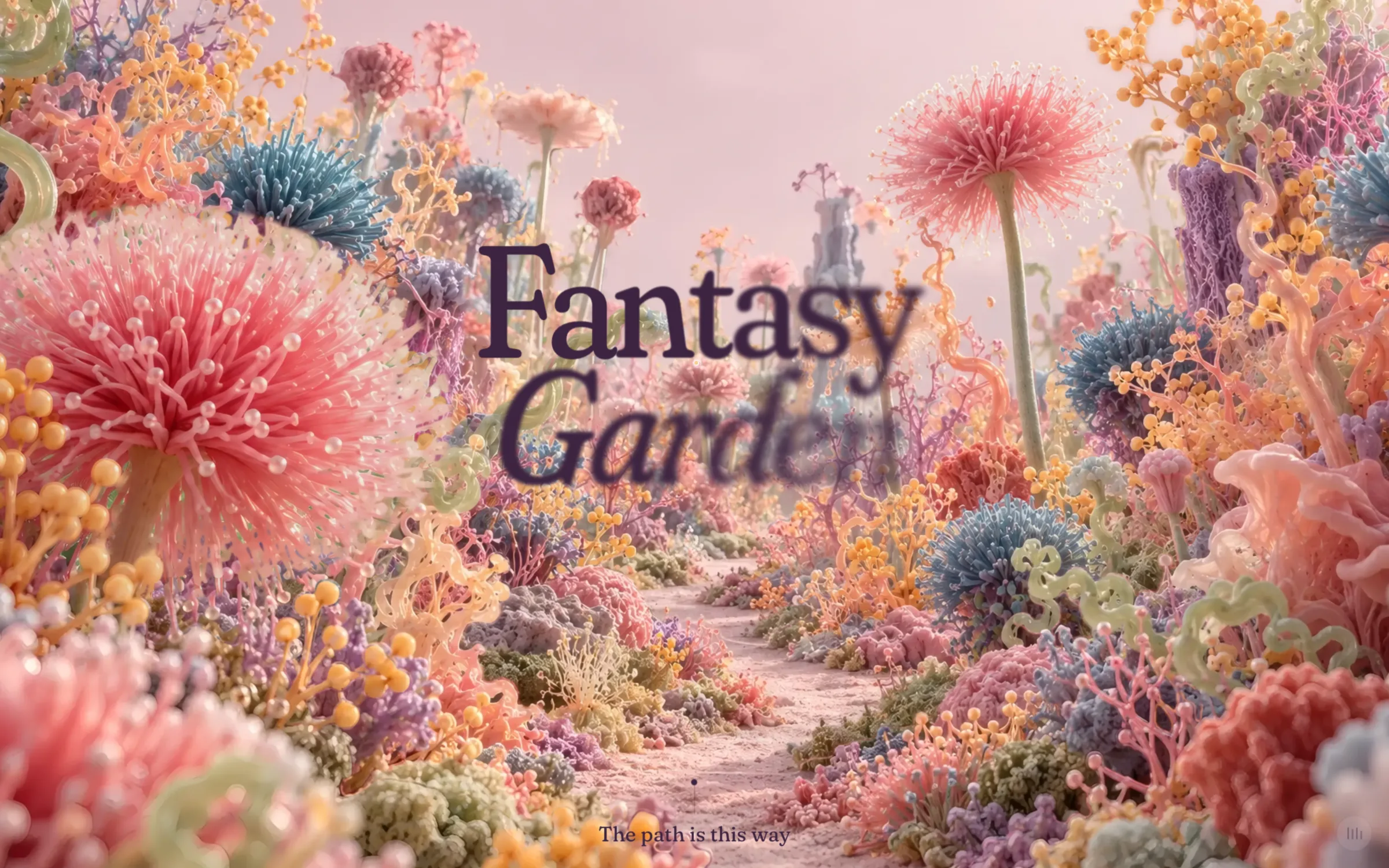
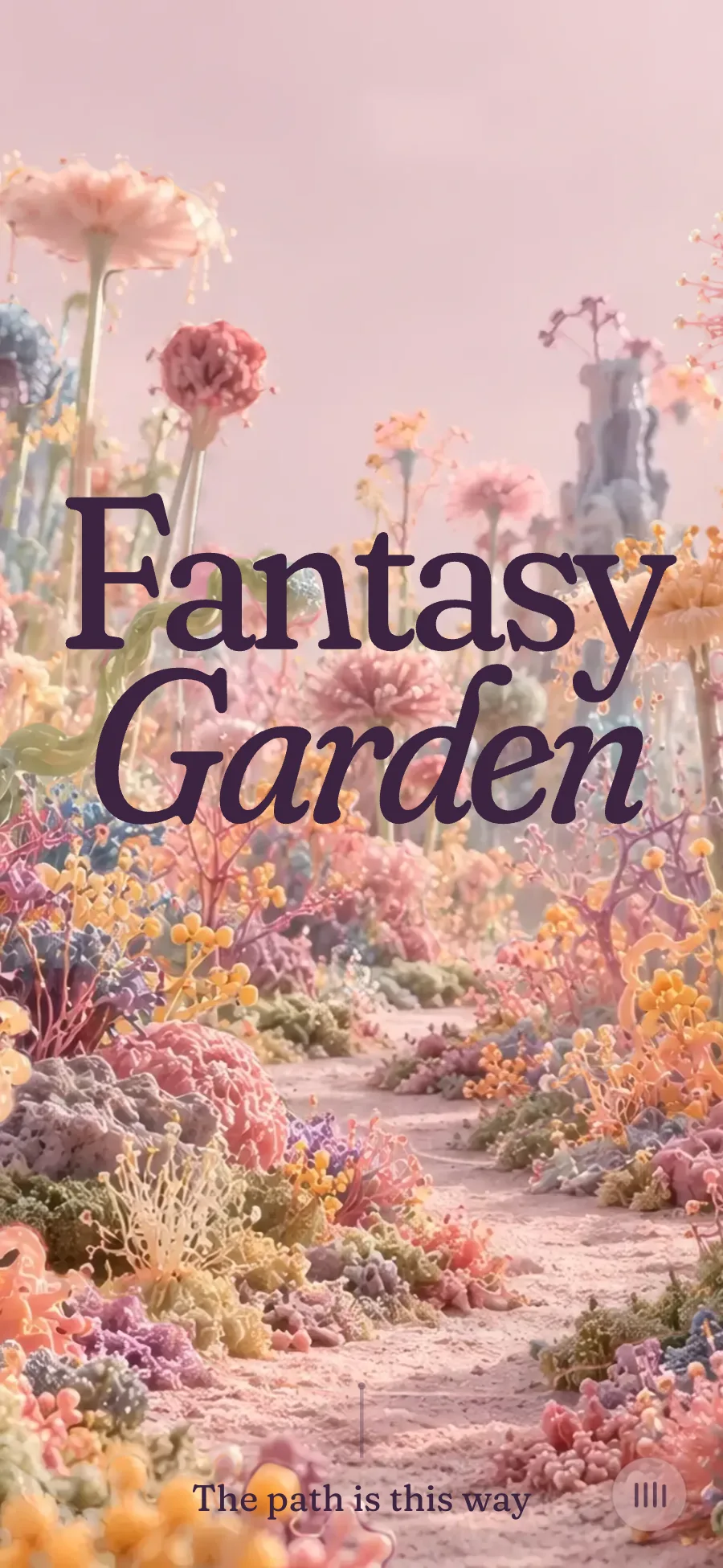
The heart of the site is the walk itself. Scrolling does not move the page, it moves you. The garden is split into five layers by depth, each one placed at its own distance from an imaginary camera, and every scroll pushes that camera forward towards the point where the path vanishes into the haze.
Because the layers obey real perspective, the nearest plants swell and fly past your shoulders while the distant ones hardly stir, and your eye reads it as true depth. Even the title lives inside the scene. It stands between the layers, with the far plants behind the letters and the closest flowers passing in front of them as you walk through.
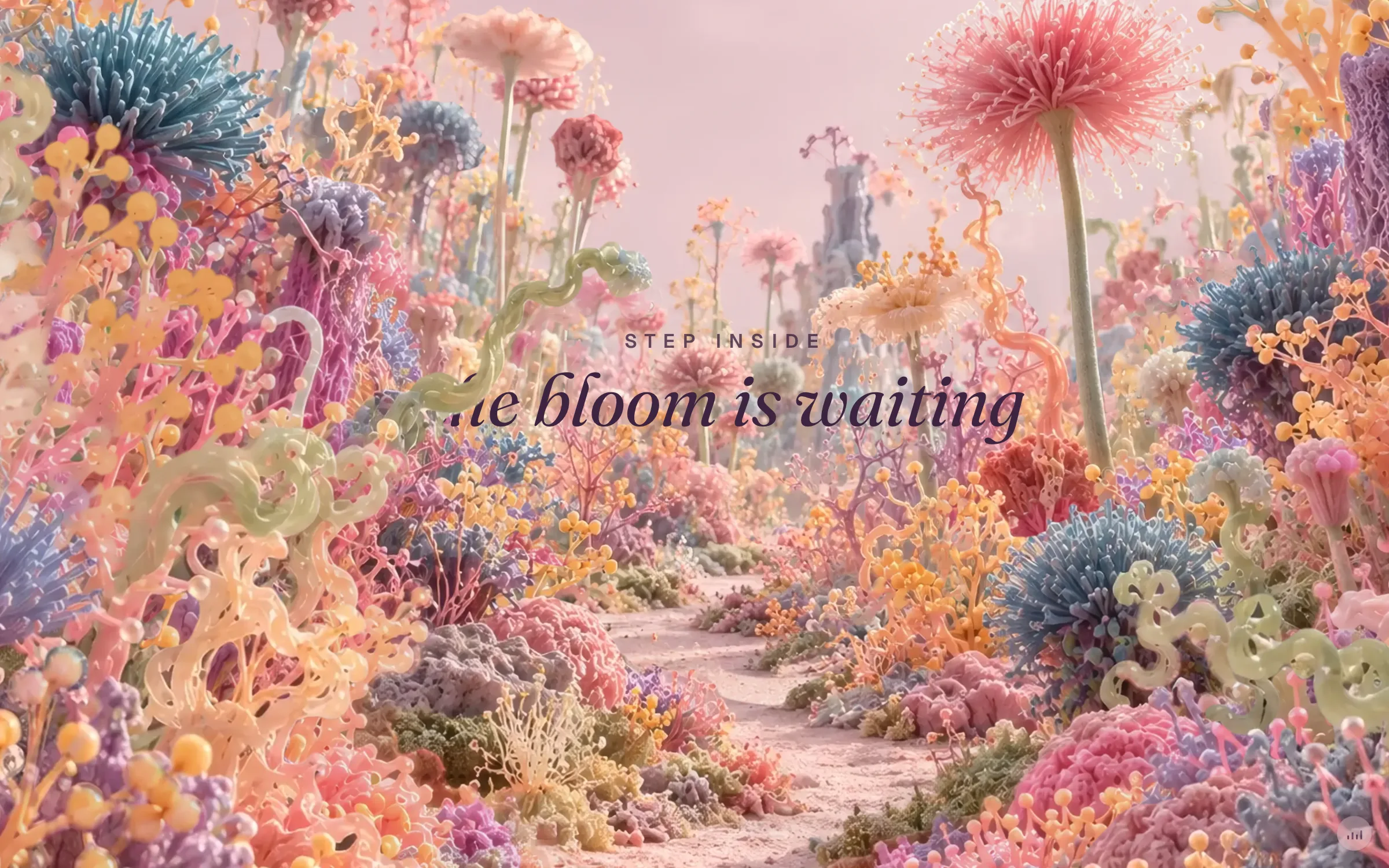
Further along the path, a new line appears among the plants: “Step inside. The bloom is waiting.” Then the garden blurs, as if your eye had moved on to something closer, and the first page of the album turns.
Three flowers, made by us in Blender
The garden’s stars get pages of their own. We built all three flowers ourselves, shaping every petal, thread and pearl with code in Blender, then rendering them in Cycles with studio light, like objects in a still-life photograph. Together they come to 540 rendered frames.
Each one does something different, so each one asks something different of you. The first you watch, the second you control with the scroll, and the third reacts to your hand. Between them, the pages turn over like a real book, shedding pollen along the fold, and small index tabs on the edge of the album let you flip straight to any plate.
Specimen 01: the flower that turns
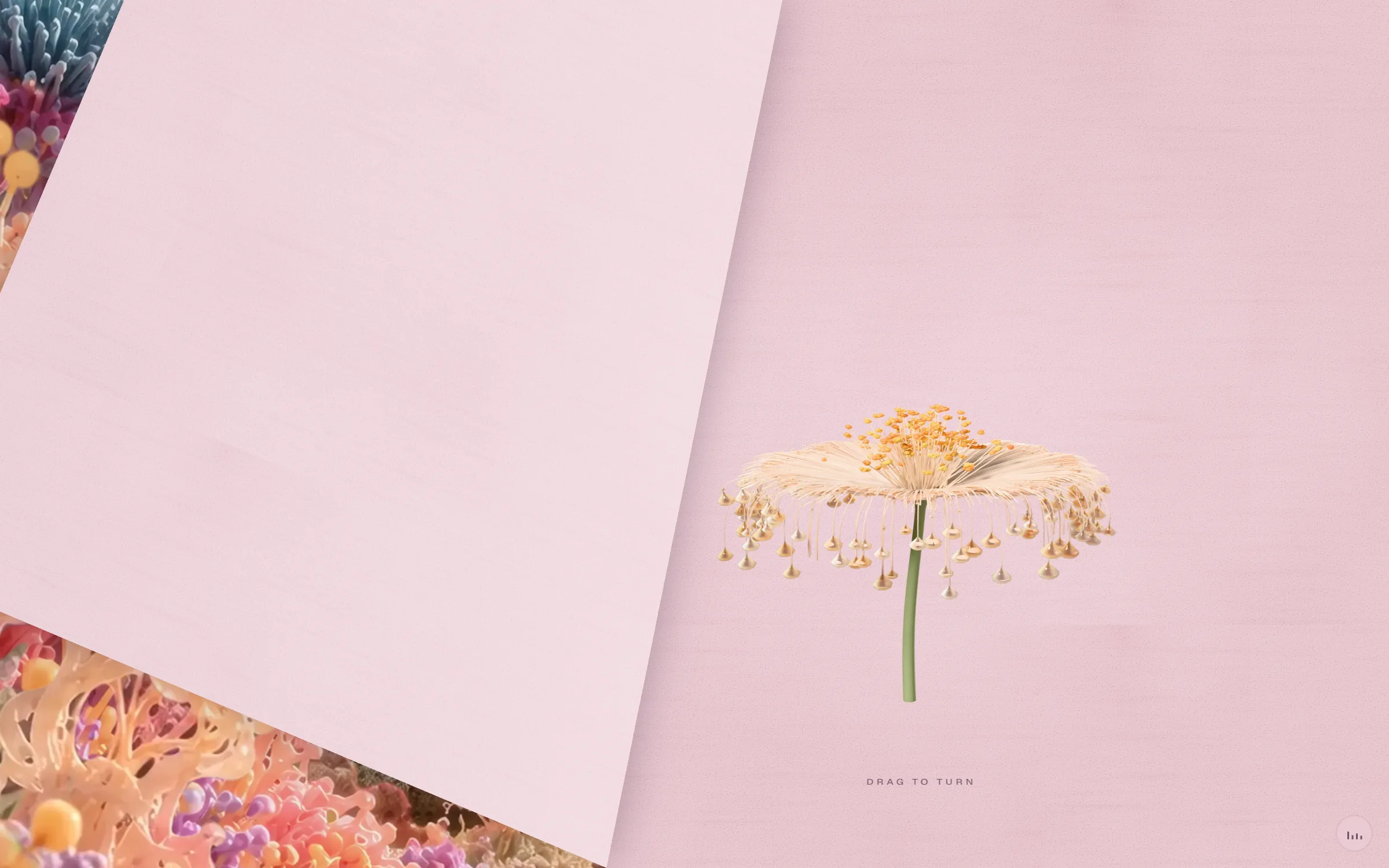
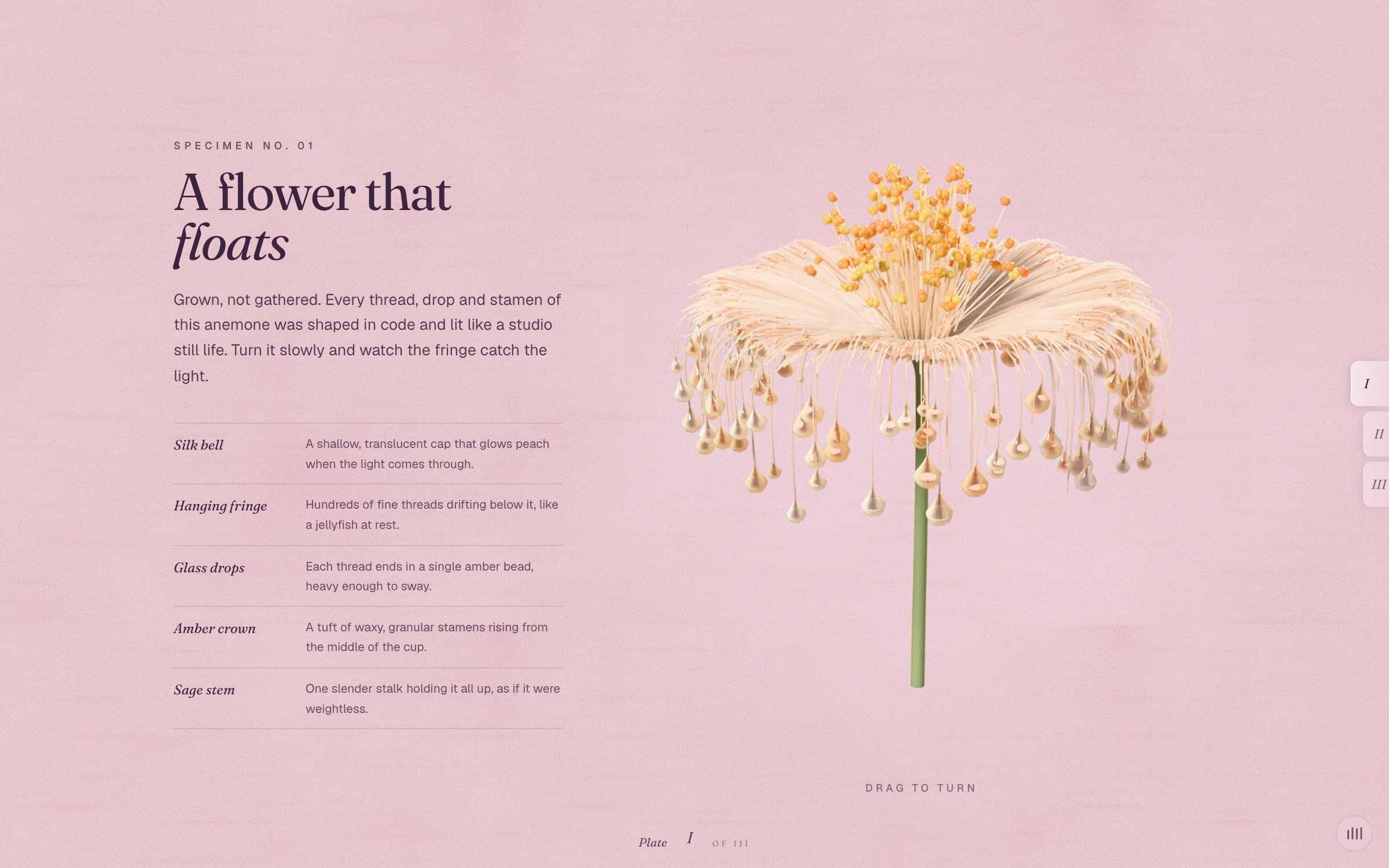
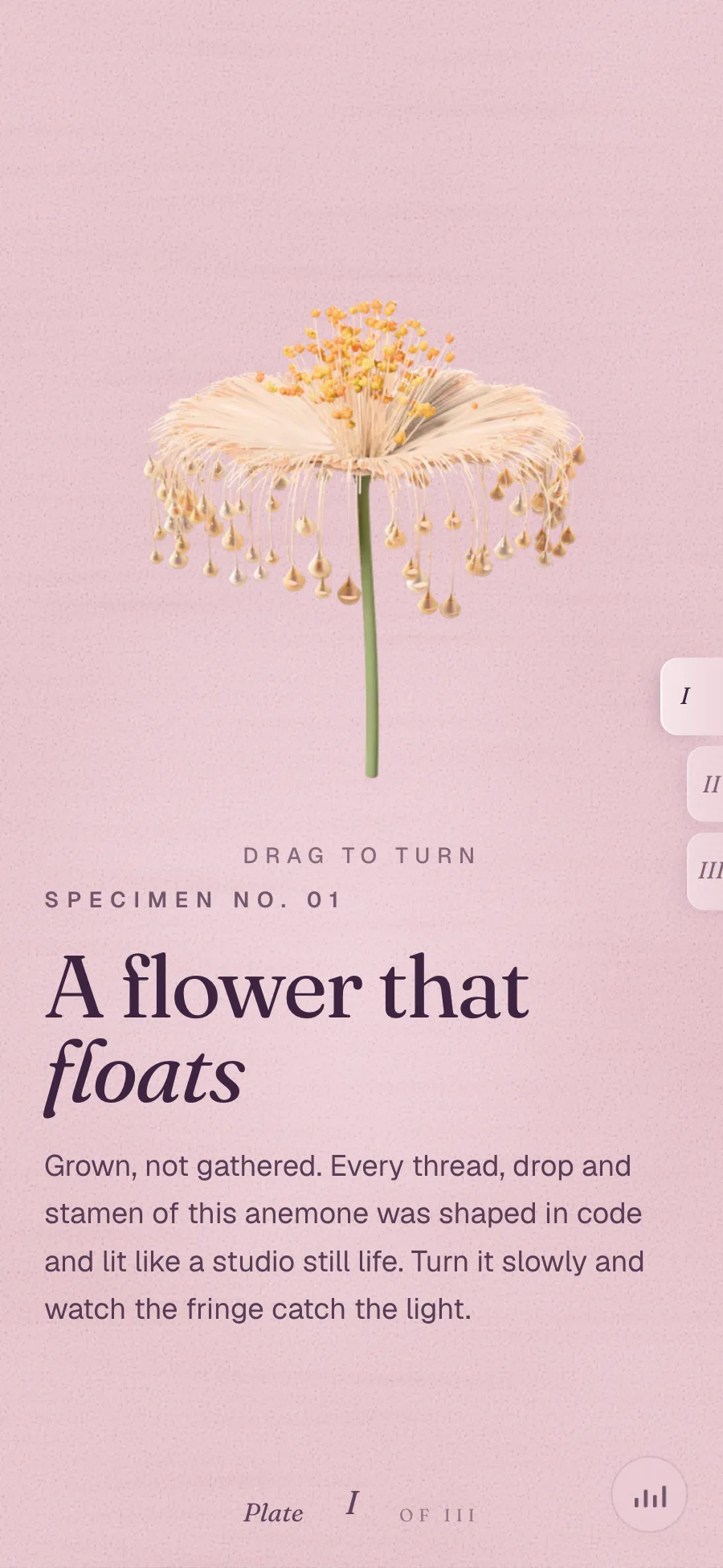
The first flower is a cream anemone that drifts like a jellyfish, with a silk bell, a fringe of hanging threads, a glass drop on the end of each one and an amber crown at its heart. It floats on the page and slowly turns through 360 degrees, one full revolution every eight seconds, with 240 frames for the circle.
Then you can take over. Drag it and it spins under your hand, flick it and it keeps the momentum before easing back into its own slow rhythm. Beside it, the field notes label its anatomy as a botanist would.
Specimen 02: the flower that opens
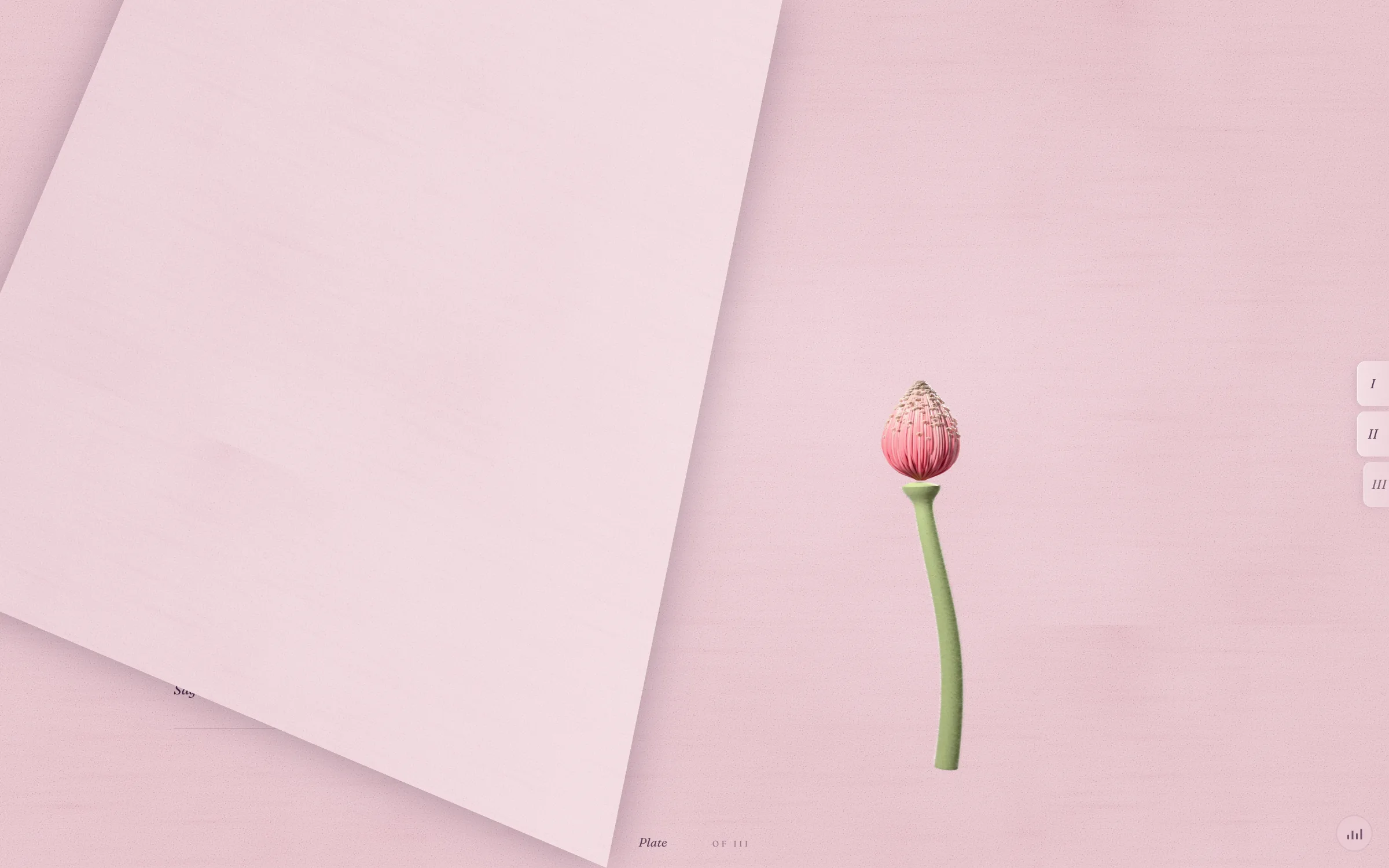
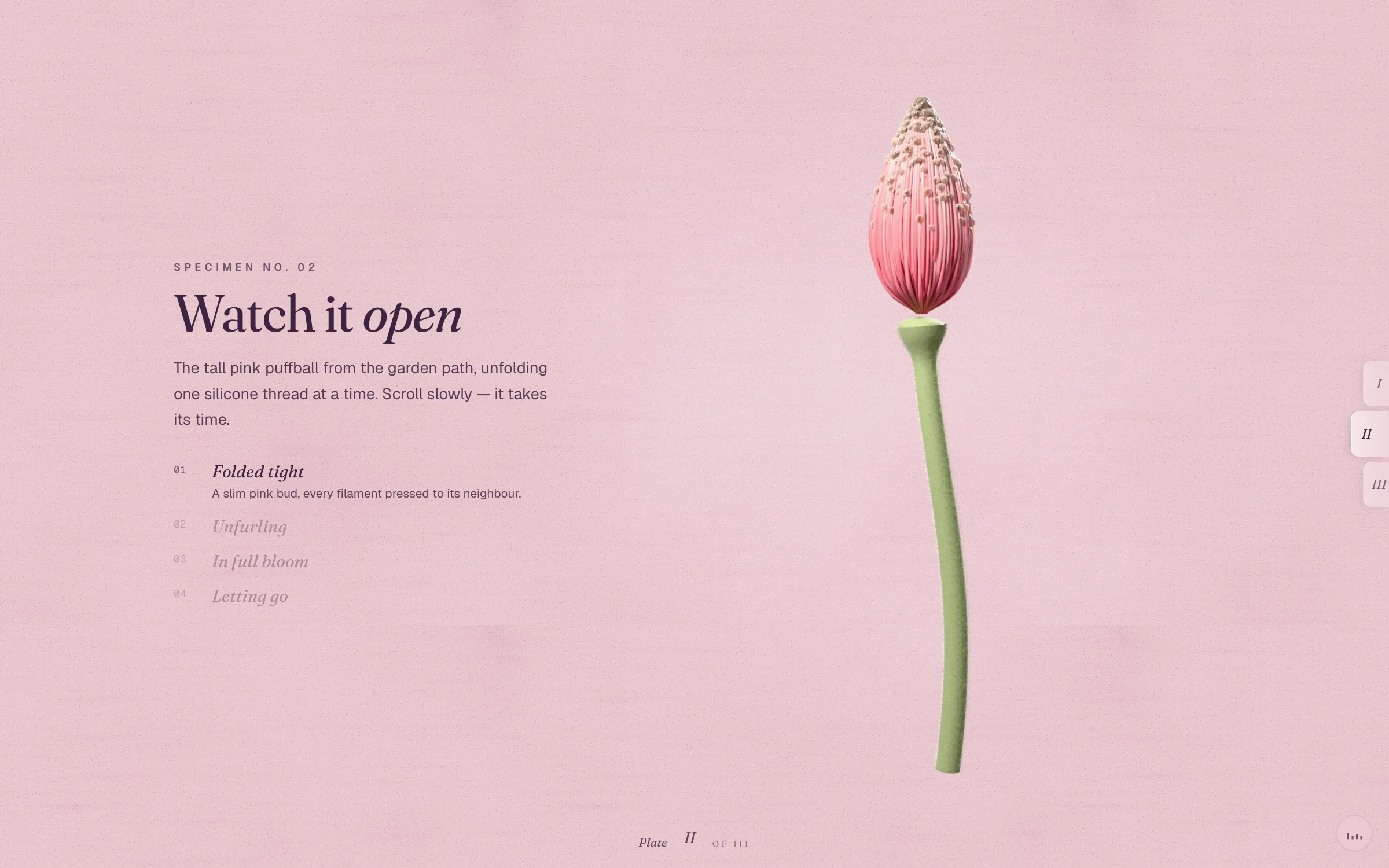
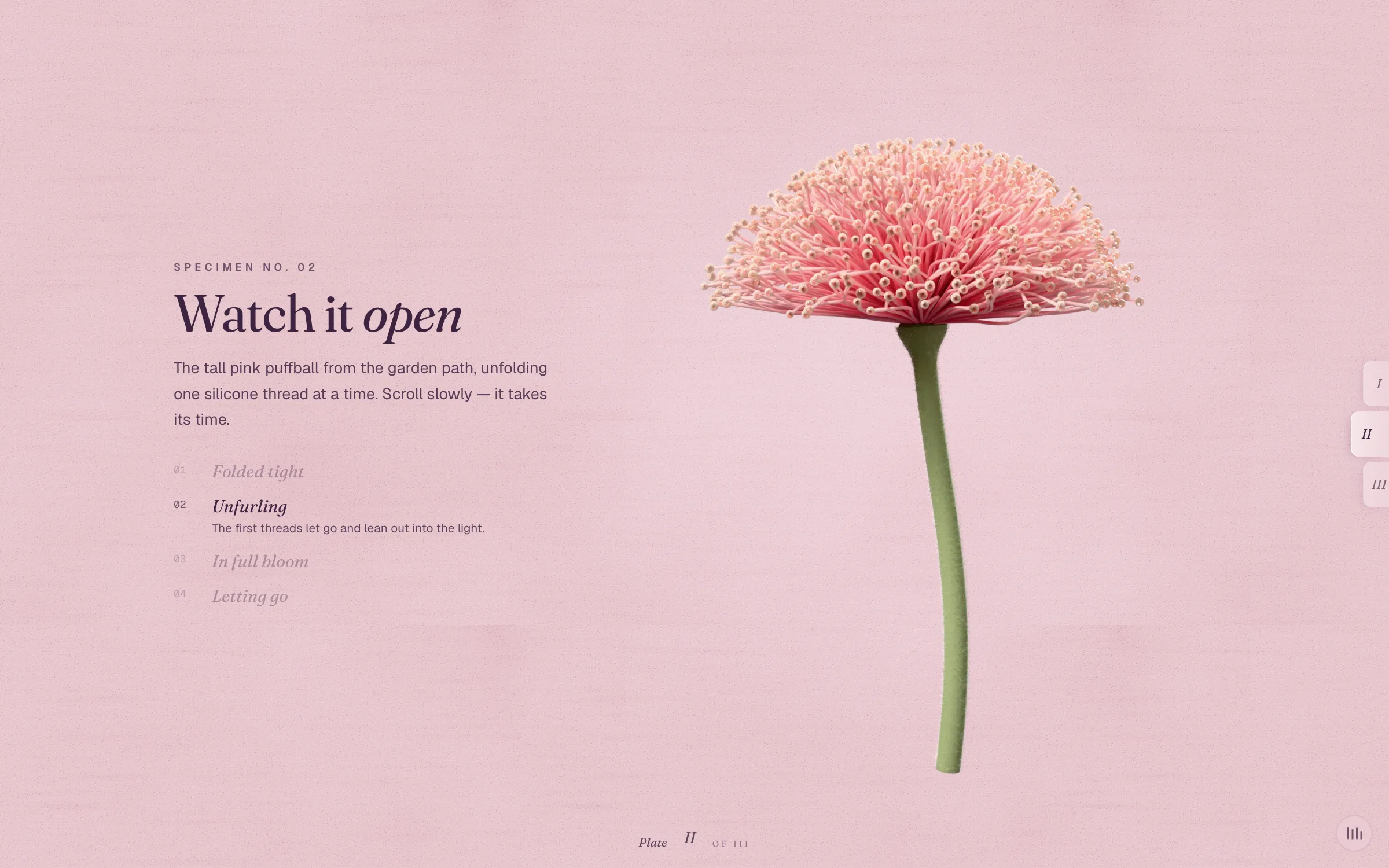
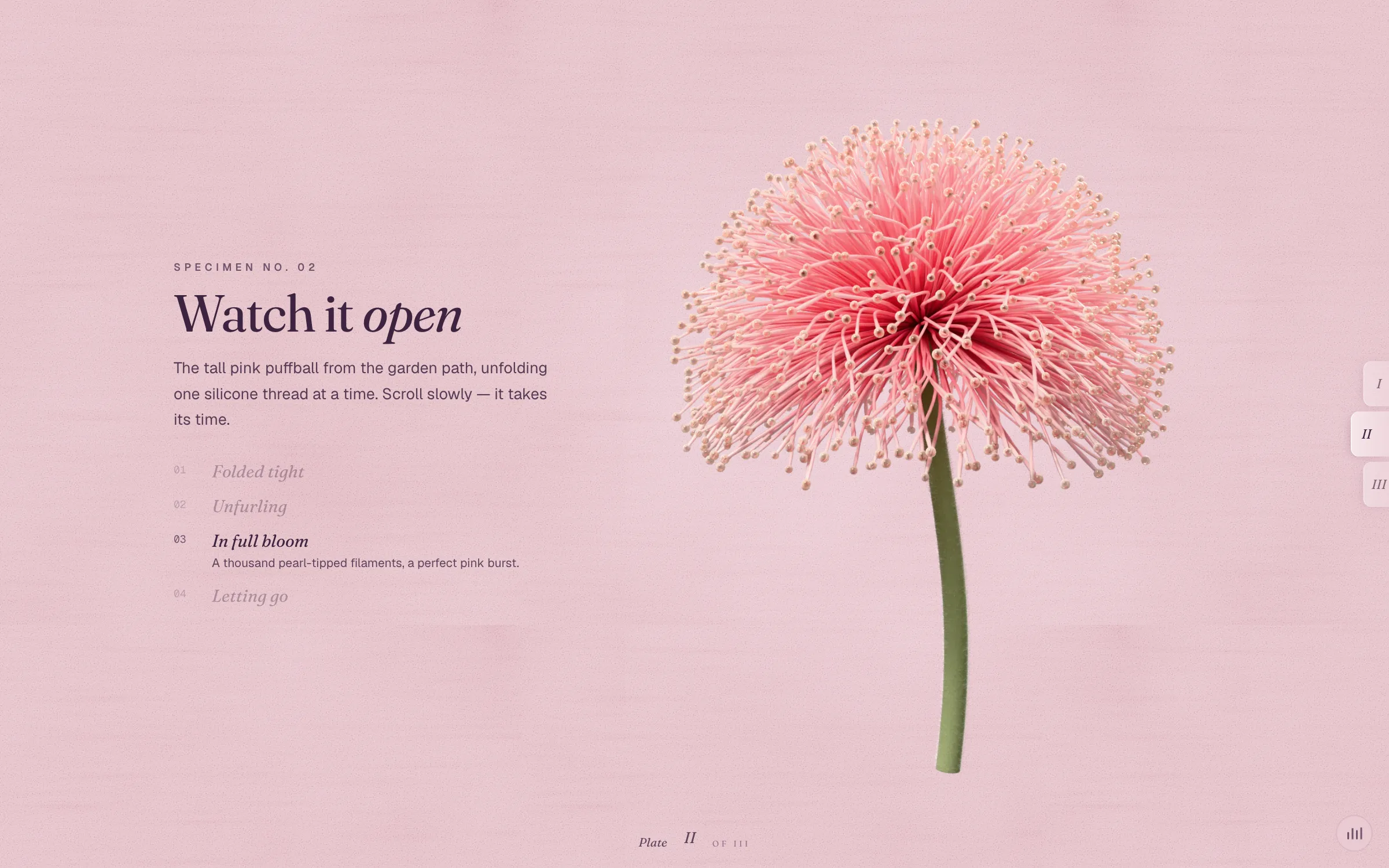
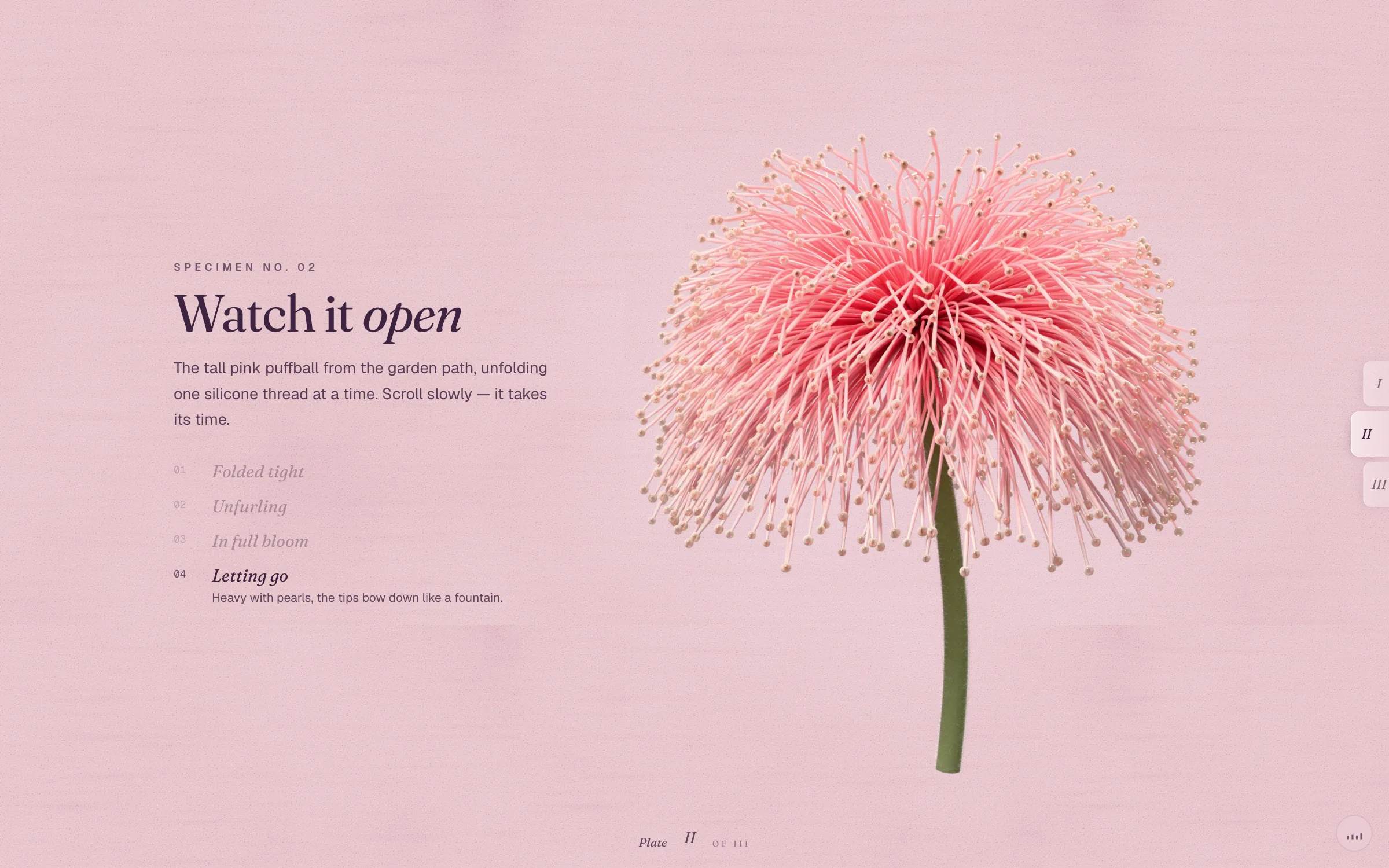
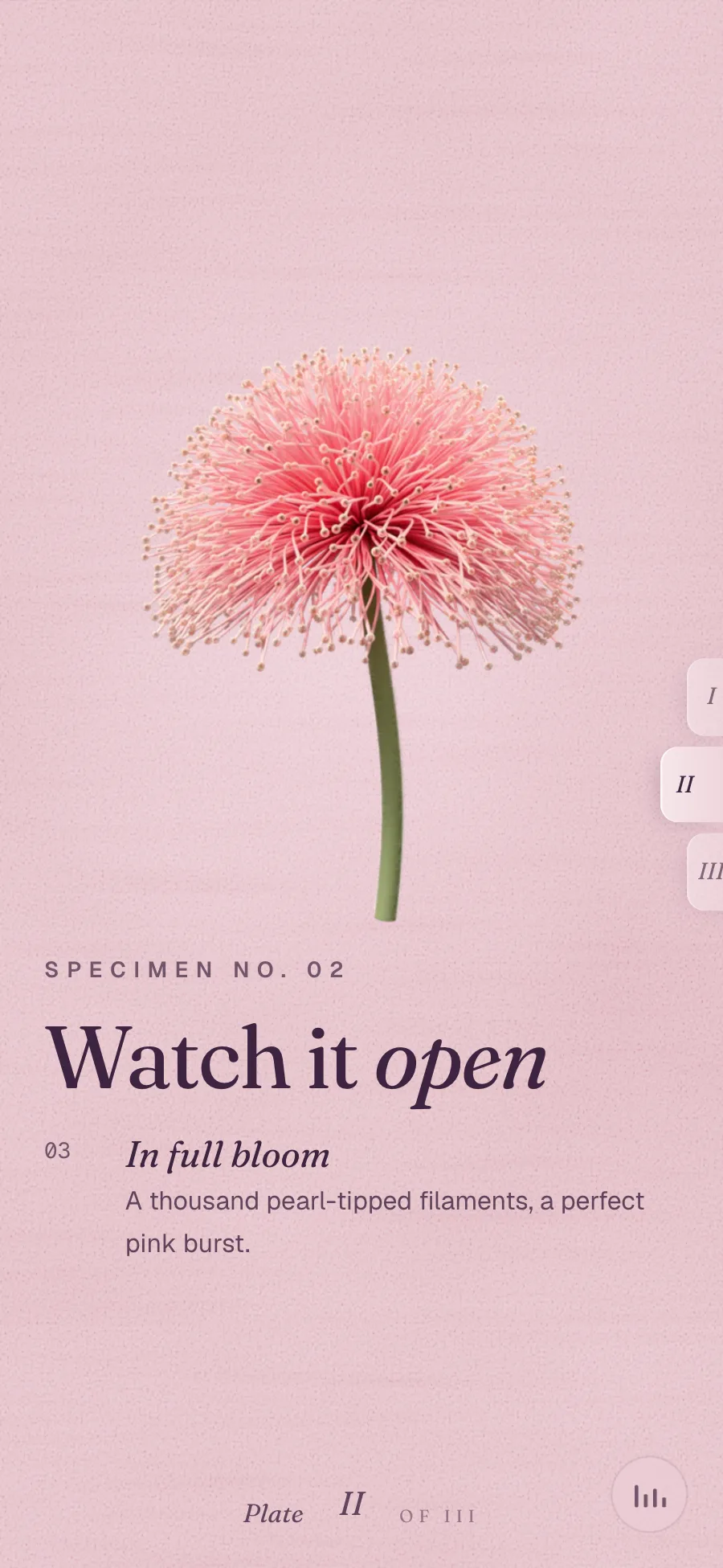
The second flower is the tall pink puffball you passed on the path, and here your scroll is what makes it bloom. It starts as a slim, closed bud. As you scroll, the first threads let go and lean out into the light, the head swells into a thousand pearl-tipped filaments, and at last the tips bow down under their own weight like a fountain.
Scroll back and it folds up again, because every one of its 150 frames is tied to your position on the page. The notes beside it name each stage as it happens: Folded tight, Unfurling, In full bloom, Letting go.
Specimen 03: the flower that hides
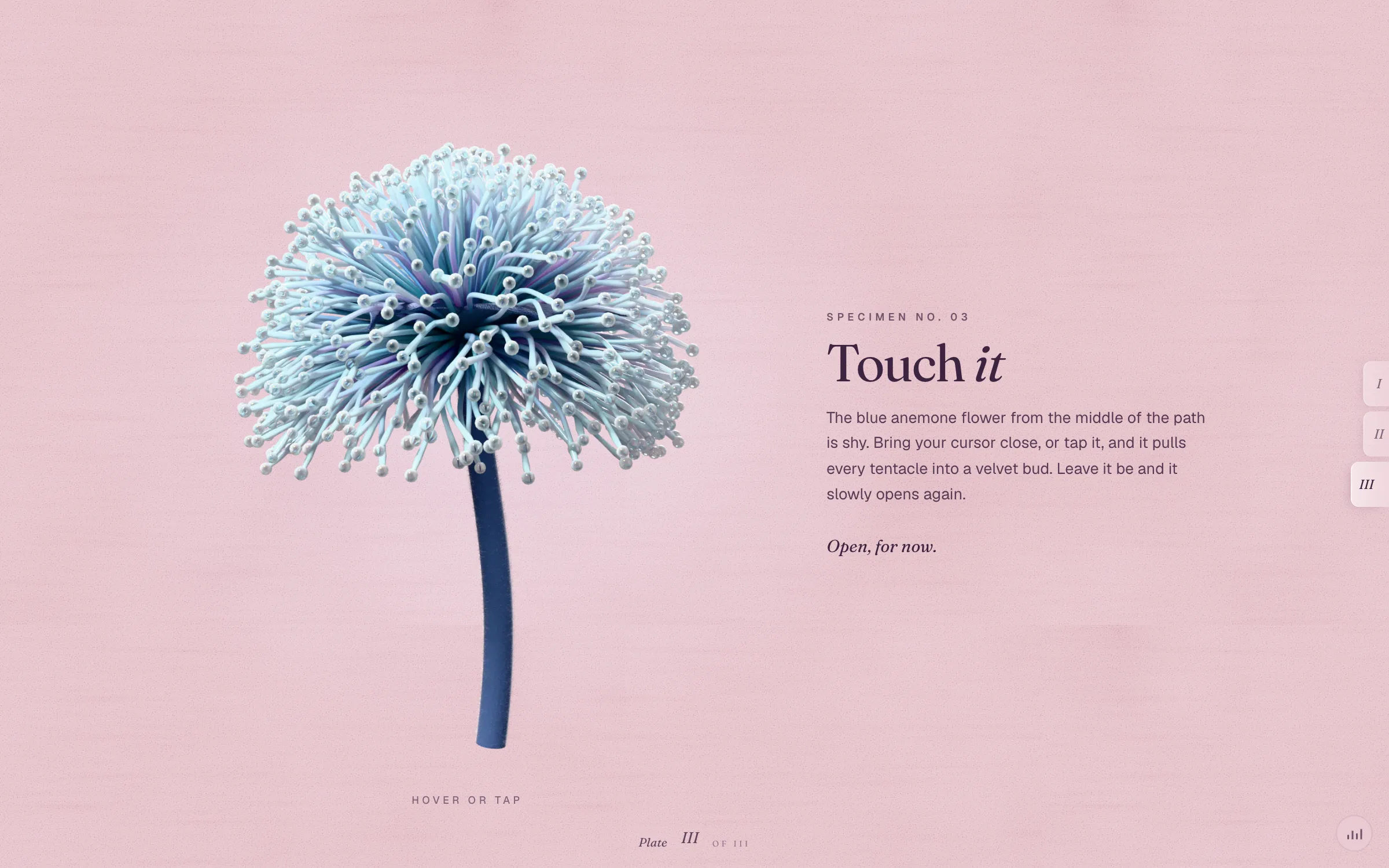
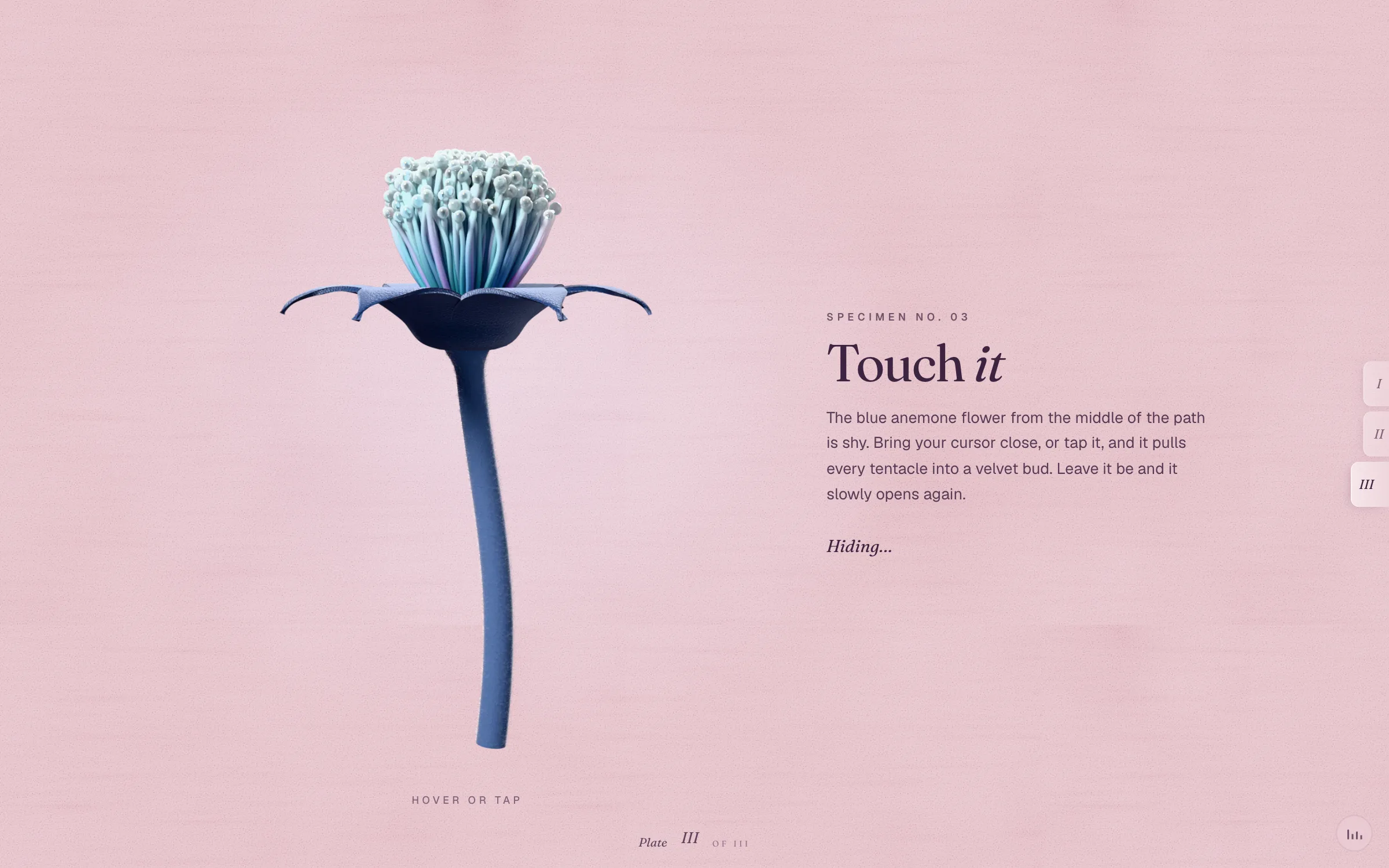
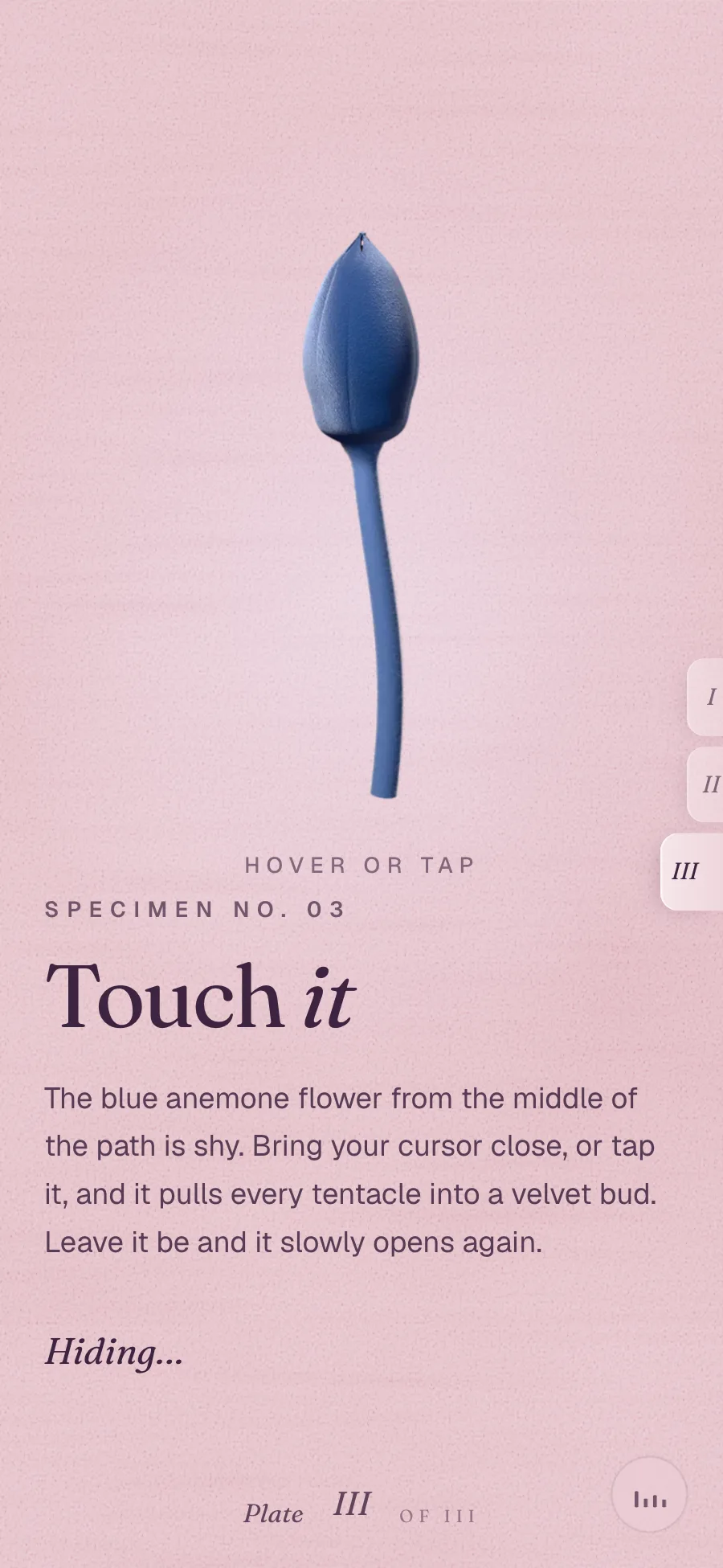
The third flower is shy. It rests wide open, a blue anemone in a burst of pale tentacles, but bring your cursor close or tap it and it snaps shut in under a second, pulling everything into a smooth velvet bud. The line beside it changes from “Open, for now.” to “Hiding…”.
Leave it alone and, after a moment, it trusts the world again, opening far more slowly than it closed. That difference in timing is the whole trick. A quick flinch and a slow recovery are what make a rendered object feel, for a second, like something alive.

Walking back out
A walk needs an ending, so the last page takes you back to where you started. You arrive deep in the garden, where the walk left off, and the camera slowly retreats down the path. The plants close up in front of you and the title returns to its place among them.
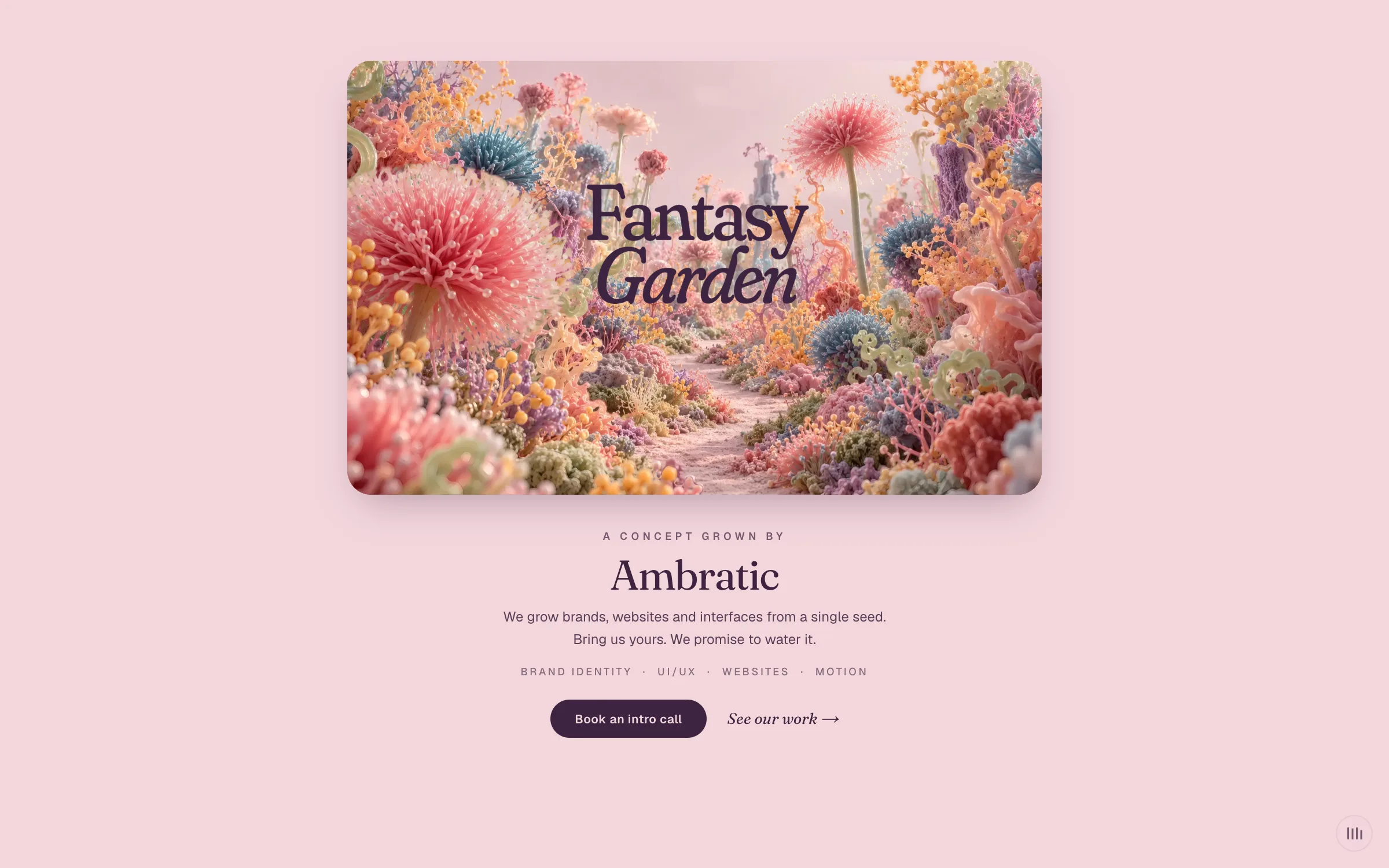
Then the whole garden shrinks into a single card with soft corners, like a picture you could put in your pocket, and the closing credits rise beneath it: A concept grown by Ambratic. We grow brands, websites and interfaces from a single seed. Bring us yours. We promise to water it.

Growing a garden for the browser
A 3D experience usually means a heavy 3D engine running on the visitor’s device. We wanted Blender’s full render quality on any phone, so there is no WebGL on the site at all. The flowers are prepared in advance and played back as images, and most of the engineering went into making that feel live.
Depth from five flat layers
Each layer grows according to its distance from the camera, the same way real objects do, so the depth comes from perspective maths rather than a 3D scene. All five load before you enter, and the walk starts from a finished picture. Phones get their own crops of the layers, cut for a tall screen, so they never download the sides they would not show.
Hundreds of frames, only when needed
Frames are rendered at three sizes, and each device fetches the one that suits it. A flower’s frames start loading as its page comes near and are let go once it is far behind, which keeps memory flat for the whole walk. The turntable loads in a clever order, every few frames first and the gaps afterwards, so a rough full turn is ready almost immediately and sharpens as it plays.
One long page, one long timeline
The entire site is a single scroll timeline that hands out its length step by step: the walk, each page turn, the bloom and the walk back out. Everything eases towards the scroll position instead of jumping to it, and scenes that are off screen stop drawing altogether.
Small touches, and calm for those who want it
The cursor is a glass pearl inside a tiny puffball that sheds pollen when you click. With reduced motion switched on, the anemone stops spinning on its own, the scenes follow the scroll without easing, and the shy flower changes state without playing its movement.
A concept that sells imagination
Fantasy Garden shows what happens when 3D, sound, motion and writing are treated as one thing. Nothing here is decoration. The loading page is the door, the scroll is your footsteps, and every flower invites a different gesture.
For clients it is a demonstration of range. The same techniques can turn a product into an object you can spin with a finger, show how something opens, folds or works as you scroll, or turn a brand launch into a place people want to walk through.
For us, the lesson was about patience. The whole site asks people to slow down, and it only works because every detail along the way rewards them for it.
- Performance on desktop
- 100
- Performance on mobile
- 96
- SEO
- 100
- Best practices
- 100
MORE WORK
You might also like
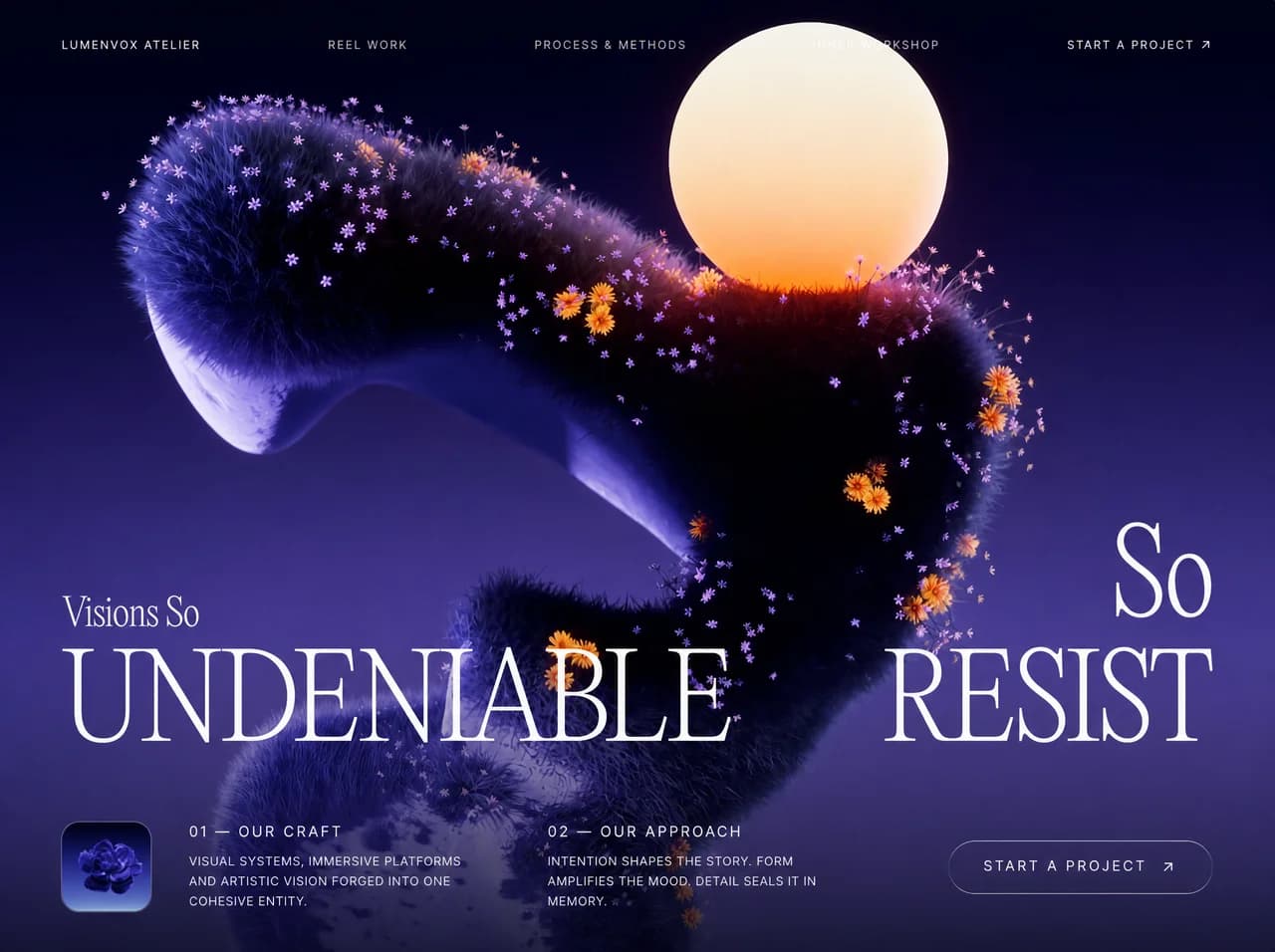
Lumenvox Atelier
Studio site for a creative atelier building visual systems and immersive digital platforms.
- Branding
- UX/UI
- Website

Apogee
AI data platform with advanced reasoning and predictive models for mission-critical data.
- Website
- Branding
- Growth